What's the Best Way to Migrate to Azure in 2026?
Follow us on our socials:
The Challenge
A familiar story in modern IT
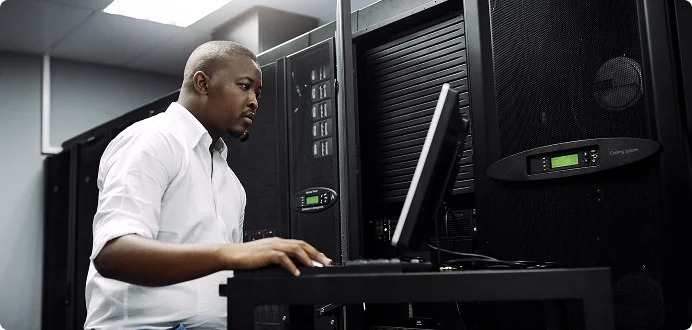
Meet Mr Ifeanyi, an IT Director managing legacy applications, on-prem servers, and rising compliance demands, keeps hitting the same barrier: a complex web of critical yet fragile systems.
The Reality: Upgrades feel risky; integrations drag on, audits expose gaps, and scaling requires workarounds instead of agility. What once powered growth is now slowing it down.
The current environment is no longer sustainable; the business needs a more secure, scalable, and flexible foundation.
Which leads to the question:
"How can they modernize their infrastructure and migrate to Azure?"
In 2026, Microsoft introduces a more unified and predictable approach to cloud migration, bringing together strategy, architecture patterns, modernization guidance, and integrated tooling.
Organizations now have a clearer, scenario‑driven path to move from legacy systems to Azure with confidence.

Why Azure Migration is Different in 2026
A new era of cloud transformation

Scenario‑driven modernization, not one‑size‑fits‑all
In 2026, Microsoft introduces a more unified and predictable approach to cloud migration, bringing together strategy, architecture patterns, modernization guidance, and integrated tooling.
Integrated tooling across the entire lifecycle
Assessment, discovery, cost modeling, modernization, and validation now plug into each other, reducing manual effort and misalignment.
Landing zones built for AI‑era workloads
Assessment, discovery, cost modeling, modernization, and validation now plug into each other, reducing manual effort and misalignment.
Deeper cross‑cloud clarity
Migration paths from AWS, GCP, VMware, and on‑prem platforms are codified with clearer equivalents and modernization recommendations.
Security modernization is no longer optional
Updated compliance requirements, Zero Trust baselines, identity modernization, and automated guardrails make security a core part of every migration, not an afterthought.
Focus on business value, not just infrastructure lift‑and‑shift
Cloud migration in 2026 is framed around modernization, agility, governance, and the ability to adopt AI and automation, not just moving servers.
Reasons To with Reliance Infosystems
A new era of cloud transformation

Our Value‑Driven Migration & Modernization Approach
End‑to‑end clarity, not guesswork
We begin with deep discovery and dependency mapping to ensure every decision is informed by real data, not assumptions.
Business‑aligned cloud strategy
Our recommendations connect directly to your business goals: cost reduction, compliance, resilience, agility, and future‑ready innovation.
Modernization where it matters most
We identify which workloads should be rehosted, refactored, replatformed, or retired, so you are not paying to migrate systems that no longer serve you.
AI‑powered acceleration
Leveraging Azure’s AI‑driven assessment, dependency mapping, and GitHub Copilot modernization tooling; we reduce migration time, risk, and effort.
Security & compliance from day one
We embed Zero‑Trust principles, governance controls, and compliance guardrails into your landing zones as part of the migration, not after.
Smooth, disruption‑free execution
Through structured wave planning and application‑aware migration sequencing, we ensure critical systems move with minimal downtime.
Ongoing optimization support
We provide continuous optimization through right‑sizing, proactive cost governance, and real‑time visibility, ensuring your Azure environment stays efficient, compliant, and high‑performing. By eliminating idle resources, enforcing guardrails that prevent cloud sprawl, and offering ongoing guidance as your needs evolve, we help you avoid overspending and maximize long‑term value.